January 29, 2026
7 min read
The Authenticity Arbitrage
The gap between usage and belief is your 2026 opportunity.

James Murray
January 29, 2026
(Was this newsletter forwarded to you? Sign up here.)
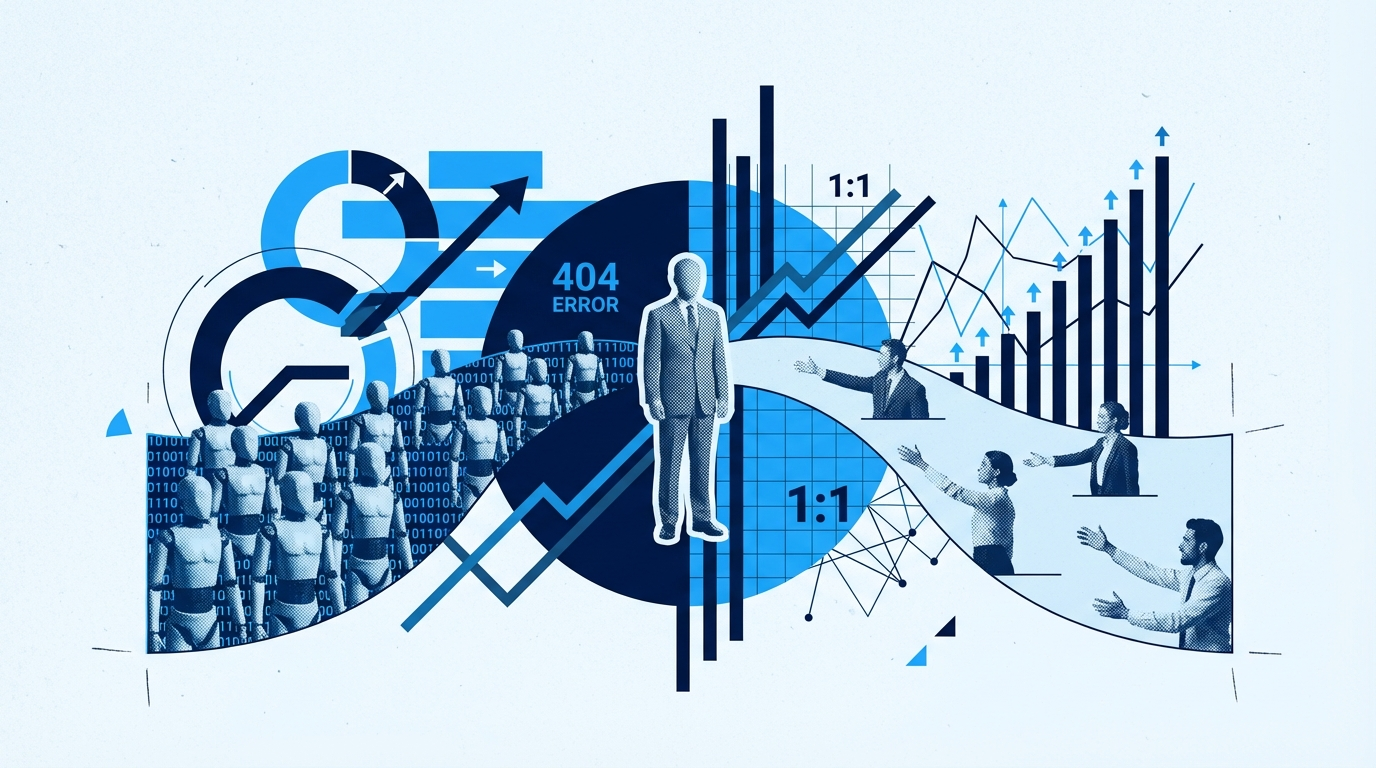
Here's the paradox of 2026: the people using AI the most are the same people who trust it the least.
70% of Gen Z uses generative AI weekly. But only 52% trust these tools to help them make informed decisions. 63% view AI-generated content as "potentially inauthentic." Over 55% say they're not okay with AI-generated models in ads.
They're not rejecting the technology. They're rejecting what it produces.
The Usage-Trust Gap
Merriam-Webster named "slop" the word of 2025. Not as an insult to bad marketing. As a description of the AI-generated flood that consumers are now trained to recognize and dismiss.
Consumer preference for AI-created content collapsed from 60% in 2023 to 26% today. That's not a gradual shift. That's a market correction.
The pattern holds across generations, but the data tells different stories depending on who you're selling to.
Gen Z: Highest AI usage (70% weekly), lowest trust in what it creates. 80% report questioning the authenticity of digital visuals. They grew up with filters, deepfakes, and synthetic media. They assume everything might be fake until proven otherwise.
Millennials: Heavy workplace adopters (56% using AI at work according to Deloitte), but similar authenticity concerns in their consumer lives. 62% report high AI expertise. They know how the sausage gets made.
Boomers: Lower usage, lower detection confidence (only 23% say they can spot AI content), but the same fundamental skepticism. They may not see the seams, but they feel something's off.
The generation that uses AI most aggressively is also the generation most sensitive to its presence in brand communications.
What Consumers Actually Trust
When Checkr surveyed 3,000 consumers across all four generations in November 2025, the trust signals that actually worked were boring:
Verified customer reviews: 63%
Word-of-mouth recommendations: 51%
Company credentials and trust badges: 46%
Notice what's missing? "Innovative AI-powered experiences." "Cutting-edge generative content." Nobody listed those.
iHeartMedia launched a "guaranteed human" positioning for their content. 90% listener support. Not because humans are inherently better. Because the market is so flooded with synthetic content that human-made became a differentiator.
The Arbitrage
Here's where it gets interesting for CMOs.
Your competitors are racing to automate content production. They're scaling output, reducing costs, flooding channels with AI-generated creative. The volume is going up. The trust is going down.
That creates an arbitrage opportunity.
While everyone else optimizes for efficiency, the brands that lean into verifiable human creation are occupying increasingly scarce territory. Not because "human" is magic. Because "human" is becoming rare.
The most successful approach isn't AI vs. human. It's AI invisible, human visible. Use the technology behind the scenes for efficiency, research, personalization, speed. But keep the human connection front and center in what customers actually see. (This is the same principle behind Anthropic's breakthrough ad campaign - they sold human potential, not AI features.)
The Practical Question
This isn't about rejecting AI. That ship sailed. Your team is already using it, and they should be.
The question is: what's your authenticity strategy?
When a customer encounters your brand, do they feel like they're talking to a person or a probability engine? Can you prove human involvement where it matters? Are you using AI to scale your voice, or to replace it?
The brands winning this moment aren't the ones with the most sophisticated AI stacks. They're the ones who figured out that authenticity became a positioning opportunity the moment everyone else abandoned it.
The gap between usage and trust is real. Someone's going to exploit it. Might as well be you.
More from Behind the CMO
View AllThe Judgment Call
February 5, 2026Svedka bet their biggest moment on AI. Some CMO approved that. That CMO is about to find out if they were right.
Monday Briefing: The Super Bowl's AI Contrast
February 9, 2026Plus: TikTok's design is 'addictive' says the EU, Collectors lures away the NFL's fan engagement lead, and why SEO is becoming GEO.
The CMO-to-CEO Pipeline Is Finally Opening
January 22, 2026She's not the only one. Here's what separates CMOs who ascend.